community action

Street Music

Douglas Schuler
The Public Sphere Project
Celebration of Public Music
Version: 
1
Problem: 

(note that the Problem Statement is still in work.....)

Music, including singing as well as the playing of instruments, has been a key element of the human condition for millennia. Unfortunately -- at least in the United States -- music has become more of a commodity, to be enjoyed passively and non-interactively. 

The rise of mass media is probably at least one of the culprits. 

Context: 

(note that the Context Statement is still in work.....)

Discussion: 

(note that the Discussion is still in work.....)

Street Music blurs the distinction between producer and consumer of music as well as the distinction between formal and informal venues for music production and consumption. 

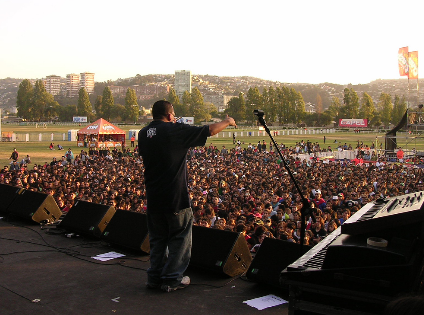
Although street bands, including many of those found at Honk Fests, can be found at protests (including the Infernal Noise Machine (image below) that supported the demonstrations against the World Trade Organization in Seattle in 1999), their actions are often political to a large degree by virtue of their publicness in an era of electronic or other formalized or mediated forms of music consumption. 

See http://www.youtube.com/watch?v=i-MLvzLlou4 for Environmental Encroachment's performance of Hashia.


Thanks to a member of the Bucharest Drinking Team and to Bob of Environmental Encroachment for their thoughts on the current breed of "new street bands" including their history and motivation. 

Solution: 


Solution in work:

something about establishing and supporting street music. More and more and more of it....

Categories: 
orientation
Categories: 
engagement
Categories: 
social
Categories: 
products
Themes: 
Social Critique
Themes: 
Community Action
Themes: 
Social Movement
Themes: 
Media Critique
Information about introductory graphic: 

Photo of Church, a marching band from Santa Rosa, California. Shot by Douglas Schuler, June 1, 2012. Georgetown (Seattle, WA)

Information about summary graphic: 

Infernal Noise Machine, Seattle Washington

Local Knowledge

Pattern ID: 
728
Pattern number within this pattern set: 
728
Douglas Schuler
Public Sphere Project (CPSR)
Version: 
1
Problem: 

placeholder.

Context: 

placeholder.

Discussion: 

This pattern is still in an exploratory stage. It will contain ideas  from Street Science by Jason Corburn, Local Knowledge in the Age of Globalization by Anne Fischel and Lin Nelson, and "Improving Civic Intelligence for Habitat Protection & Rehabilitation" by Prateek Trivedi.

This is from Prateek's report: 

When considering the application of any ‘modern’ or scientific environmental management, one must take into account the indigenous knowledge of the resident communities. As Alison Field-Juma wrote, “Re-examination of indigenous natural resource management systems has shown that far from being static they have embodied the responsiveness, resilience and complexity of the ecology upon which they are based.”

Solution: 

placeholder.

Pattern status: 
Released

Sousveillance

Pattern ID: 
386
Pattern number within this pattern set: 
386
Bryan
Douglas Schuler
Public Sphere Project
Version: 
1
Problem: 

"One of the fundamental contrasts between free democratic societies and totalitarian systems is that the totalitarian government [or other totalitarian organization] relies on secrecy for the regime but high surveillance and disclosure for all other groups, whereas in the civic culture of liberal democracy, the position is approximately the reverse." -- Professor Geoffrey de Q Walker, now dean of law at Queensland University in Australia.

Over the past two decades, surveillance has permeated society in ways that only Orwell could have imagined. The increasingly low costs of electronics and data storage coupled with scare tactics like terrorism have given governments worldwide the green light to put public and private spaces under their eye. During 2008 alone, Sprint gave location data of their users over to law enforcement a total of eight million times.  The surveillance infrastructure is owned and controlled primarily by those with political and class privilege. This creates a situation where people can be watched but cannot "watch the watchers". As a result, the accountability of police, politicians, and other authority figures decreases.

Context: 

In any political / social context, from a liberal democracy to an authoritarian government. Sousveillance in a democratiic (or quasi-democratic) country is particularly important in times of overzealous governmental secrecy, propensity towards surveillance, and increasing political repression.

Discussion: 

"Steve Mann presents the notion of sousveillance as a method for the public to monitor the establishment and provide a new level of transparency. This has been the role of the press, but with its strong orientation toward positive feedback, the media has tended to focus on less relevant issues, which get an inordinate amount of attention. One such example was the media's fascination with Gennifer Flowers and her claim that she had had an affair with President Clinton." -- From Joichi Ito's discussion of Emergent Democracy. One of the first thing that George W. Bush did when he became president of the US was to place his father's writings (which by law were supposed to be made public) into secrecy.

We live in an age where ever-increasing portions of the population have turned to social networking where they divulge the most personal and private details of their life to their friends, their co-workers, and most anybody who cares to look. Facebook, Google, and other advertising giants track every website a person goes to with an ad or a 'like' button on it. People scan their loyalty cards at grocery stories and give their entire purchase history, name, number, and address to the highest bidder in exchange for a few dollars off their bill. Those who run their surveillance infrastructure have not been blind to this and have begun investing significant resources into monitoring social networking sites and rich sources of user-generated information.

No matter where one turns, they can find information on their fellow citizen that they would rather not have revealed. Security cameras, credit cards, and RFID-enabled identification cards track our every movement. Normal activities which one might not want the world to know about like visits to the pharmacy, an alleyway make-out session, and a visit to Planned Parenthood all become a spectacle for those on the other end of the camera to enjoy.

While some of the information garnered by dragnet surveillance is available to the public or those of small financial stature, most of it is locked in databases and storage systems run by the rich and powerful. In 2005, it was revealed that for the past five years the National Security Agency had been collecting wholesale internet traffic, call records, and other private information from millions of Americans without warrants, subpoenas, or any judicial oversight. In a 2001 report, the European Union validated a theory that the United States, in conjunction with allies such as the UK, operated a global surveillance network called ECHELON which could intercept most worldwide communications. It is said that through publicly and privately operated surveillance cameras, the average Londoner is photographed 300 times per day. The majority of people are watched with intense scrutiny throughout the entirety of their lives while the minority of people who commit the biggest crimes sit behind closed doors where they can execute their plans for financial and social dominance in privacy and without interruption. People no longer seem to be surprised to hear that the dash-cam of a police car was mysteriously off when the officer flew off the handle or that the video from a jail beating is missing.

How can we change this dynamic? How can surveillance systems actually be used for widespread social accountability instead of preserving the interests of those who own them?

Study after study shows that surveillance does not actually reduce crime or make the average person safer and a steady stream of news stories show that surveillance abilities are used improperly by those who have them. A study conducted by Hull University showed that one in ten women were targeted for 'voyeuristic' reasons by male camera operators. Norris, C. and Armstrong, G. "The unforgiving Eye: CCTV surveillance in public space" Centre for Criminology and Criminal Justice, Hull University, 1997. Seeing this, the simple solution seems to be to outlaw surveillance equipment entirely or create rules to hold its owners accountable. To some extent, this has already been done. The government is barred from using surveillance and search powers without obtaining necessary legal justification and corporations have similar but less stringent limitations. Nonetheless and unsuprisingly, these rules have not stopped widespread abuse as those who own surveillance systems are often the same ones who fare better in courts and the media due to societal privilege.

Solution: 

People must have the means to watch the watchers. Steve Mann's term "sousveillance" captures this idea. As the age of surveillance is here to stay (at least until we live in a world where people's privacy is put above the sanctity of property), there must be a way to change the dynamic of surveillance. Sousveillance requires tools which are easy for laypeople to use, a network for communicating among those who use them, and a method for spreading information that comes from sousveillance. There are many some tools such as Freedom of Information Laws, cell-phone cameras, and independent media networks which help facilitate sousveillance but there are not nearly enough and they are not as widely adopted as necessary. People must make these tools easier to use, put them into the hands of more people, and make their use ubiquitous enough to truly scare those who they are meant to keep an eye on.

Pattern status: 
Released

Online Anti-Poverty Community

Pattern ID: 
126
Pattern number within this pattern set: 
126
Penny Goldsmith
PovNet
Version: 
1
Problem: 

Anti-poverty advocates and activists are isolated in their own communities. They often do not have the communications and education and training resources they need to do their work. Poor people do not have the information they need in order to take control over their lives and get the resources to which they are entitled, or to advocate effectively for themselves. Lack of access to communication severely limits the opportunities for building communities where poor people can help themselves access the resources they need and where advocates and activists in the anti-poverty community can be involved in organizing for social change locally, nationally and internationally.

Context: 

The players in this online movement include poor people and advocates involved with community advocacy groups, settlement workers, multicultural groups, seniors organizations, disability groups, legal aid, test case interveners, labour organizations, public libraries, women

Discussion: 

Poverty is a debilitating worldwide problem that affects poor people directly, and society at large. Although access to information and resources is critical to overcoming poverty and alleviating the problems of people living in poverty, poor people and anti-poverty advocates traditionally have less access to the internet and other communications technology.

Although poverty and computers do not make for an obvious alliance, it is clear that the two worlds have to connect unless we want to have a society where access to information and resources is only for people who can afford access to the technology. Public access sites are rarely adequate to feed public need; users need people to help them do online research, and free printers to print out forms and information. Hosts of public access sites need money to keep equipment up-to-date and tech support to keep computers and internet connections running smoothly. Lack of access to communication makes it difficult to connect communities in the anti-poverty world outside their local regions.

PovNet is a non-profit society created in British Columbia, Canada in 1997. It is an online resource for anti-poverty advocates and poor people, created to assist poor people and advocates involved in the communities identified above through an integration of offline and online technology and resources. PovNet works with advocates and activists across Canada involved in direct case work and social action and justice. Some of these groups include: * Canada Without Poverty (http://www.cwp-csp.ca/), a national voice for poor people, working to eliminate poverty in Canada * The Canadian Centre for Policy Alternatives (http://www.policyalternatives.ca/), a left-wing think tank doing research for change in social policy * Canadian Social Research Links (http://www.canadiansocialresearch.net/), an all-inclusive resource for social policy information about poverty in Canada.

PovNet is an online home base for advocates in BC and across Canada. Its web site provides regularly updated information about issues and policy changes. Using PovNet resources is an interactive process. Advocates learn the tools because they find them useful in order to do the social justice and case work that they care about; poor and otherwise marginalized people find the web site when they need the information on it that is relevant to their lives.

For example, PovNet email lists have grown over the years to be an invaluable resource for specific campaigns (for example the Raise the Rates campaigns in both Ontario and British Columbia to raise welfare rates). They also provide an online support network for advocates working in sometimes quite isolated areas in British Columbia or in other parts of Canada. As one advocate put it: "I love the PovNet list - on the lighter side there's the kibitzing going on amongst the subscribers which often brings me to laughter - always a good thing in this job. On the serious side - the exchange of ideas and generous sharing of experience is a huge boon to those of us who often don't have time to pick up the phone to seek advice from our colleagues." Another PovNetter says: "The lists that I am a subscriber provide me with first hand current information on what issues are affecting BC residents and/or newcomers. I am able to provide useful information and referrals to some of the requests coming through PovNet lists. They are an invaluable and efficient resource for community advocates, settlement workers working with immigrants and refugees, especially those issues that are time-sensitive and need an immediate response."

Other PovNet tools include online education and training courses on PovNet U for advocates ("Introduction to Advocacy", "Disability Appeals", "Tenants' Rights", "Employment Insurance", "Seniors Residential Care Advocacy", "Dealing with Debt"). 

PovNet is a flexible tool in that it can adapt to needs as specific campaigns emerge. For example, we set up an email list for a  campaign to raise welfare rates, and created an online hub for papers and press releases when a group of anti-poverty activists travelled to tyhe United Nations in Geneva to speak on behalf of poor people in Canada on social and economic rights.

Building a successful online movement in anti-poverty communities include, first and foremost, the people who are involved in the movement. Start by finding local community workers who want to broaden their connections, getting together key people (without computers) to talk about what is needed and identify the technological limitations, communicate with advocates and activists in diverse anti-poverty communities including urban and ural, First Nations, aboriginal, diverse cultural communities, disability groups, women, youth, seniors, workers, human rights and anti-poverty workers, and international anti-poverty workers. Then identify the barriers, which could include access to the technology (education, money, literacy, language), how to share information, resources and skills between "have" and "have-not" advocacy communities (e.g. community advocates and advocates in funded agencies, etc.), researching how to provide online resources in languages other than English and how to provide an online space for poor people to communicate and access information via public access sites and web based interactive resources.

Barriers for advocates and activists using PovNet tools have changed over the years. Initially, fear of technology was a big factor. But as advocates saw the use of it as a communications tool, they taught and continue to teach each other. Money for computers and printers is an ongoing problem; as the technology demands higher end equipment, advocates in rural communities with dialup get frustrated with attachments that take up all their dialup time, for example. The anti-poverty work gets harder as governments slash social services; the advocates have fewer resources to do their work. Technology can't help that. But in spite of the difficulties, the network continues to grow, make links with other organizations both in Canada and internationally, and exchange ideas and strategies for making social change.

Solution: 

The most effective online anti-poverty communities are constructed from the bottom up rather than the top down. Their resources are defined and created by advocates and poor people to address the need for online anti-poverty activism as they come up. Electronic resources can provide additional tools but they are activated and made useful by the underlying human and locally based networks where the work of advocacy is actually being done.

Pattern status: 
Released

Peaceful Public Demonstrations

Pattern ID: 
434
Pattern number within this pattern set: 
133
Douglas Schuler
Public Sphere Project (CPSR)
Version: 
2
Problem: 

Governments and large companies often ignore the will or well-being of the people. An election can be stolen a war can be illegitimately launched, an environmental disaster can be caused — all without significant challenge from legistatures, the courts or other designated "guardians of the people."

Context: 

When "normal" dissent is being ignored; when imminent, possibly catastrophic, initiatives are being undertaken such as an unprovoked invasion of a sovereign country. In these cases "traditional" ways of registering dissatisfacton aren't appropriate.

Discussion: 

Although crowds of people can be — and are — denigrated by politicans, the media, and other powerful institutions, their existence is somtimes the most profound expression of a population whose rights or sensibilities are being ignored. People must sometimes take to the streets to visibly express their dissatisfaction.

Large public demonstrations are probably the most overt form of protest. It is hard to deny the reality of thousands, tens or hundreds of thousands of people, in the streets peacefully marching, with banners and signs, music, costumes, noisemakers and other devices that have been spontaneously and individually designed. Though often portrayed in the media as marginal and/or dangerous, mass demonstrations (such as those in the Ukraine in December 2004) are generally peaceful and, indeed, suitable for the whole family. As a matter of fact, the presence of families and older people helps ensure that the demonstrations are peaceful. Through their visibility, they also help to legitimize the protest by showing that the concerns aren't limited to one demographic use, youths, for example.

In February, 2003, the world witnessed the largest expression of this pattern in history. People gathered in over 600 ciites in over 40 countries worldwide to protest the invasion of Iraq by the world's only superpower. Although the Bush administration was undeterred by this unprecedented display of disapproval, the idea of peace as an ideal was brought forward by civil society worldwide and held aloft as a universal idea — one that citizens must not allow governments to pursue — or ignore — according to their own calculations and motivations.

Mass peaceful demonstrations don't take place in a vacuum. They need to be tied to broader strategy. This often involves engaging with the media and with established governing (or intermediating) entities. It is often helpful to have a clear set of demands. Finally, although this doesn't always happen, measures like gathering names and contact information can be used to help build a large activist network that persists beyond the duration of the protest itself.

I was dreaming in my dreaming
Of an aspect bright and fair
And my sleeping it was broken
But my dream it lingered near
In the form of shining valleys
Where the pure air recognized
And my senses newly opened
I awakened to the cry
That the people / have the power
To redeem / the work of fools
Upon the meek / the graces shower
It’s decreed / the people rule

   -- Patti Smith, "The People Have the Power"

I think that the photograph of the demonstration in Los Angeles (early 2003) against the US invasion of Iraq used above is from a web site that helped promote the worldwide peace demonstrations.

Solution: 

Peaceful, mass public demonstrations both large and small, in combination with other forms of dissent are sometimes necessary.

Verbiage for pattern card: 

Although demonstrations are disparaged by politicians and the media their existence is sometimes the deepest expression of those whose rights or sensibilities are being ignored. It is hard to deny the reality of thousands of people in the streets peacefully marching, with banners and signs, music, costumes, and noisemakers. Peaceful Pubic Demonstrations need to be tied to broader strategies that include building activist networks that persist beyond the protest itself.

Pattern status: 
Released

Media Intervention

Pattern ID: 
427
Pattern number within this pattern set: 
132
Douglas Schuler
Public Sphere Project (CPSR)
Version: 
2
Problem: 

Corporate media exists to make as large a profit as possible; responsiveness to the public interest is secondary at best. Like a drumbeat, its endless repetition presents an unremitting pulse to our lives. Corporate media is scripted by people far away from the "ordinary" people who spend their time with it. Alternatives to corporate media exist of course, but the audiences are substantially smaller; the alternatives generally have lower "production values" (due to fewer resources) and are much harder to find. Consequently they are enjoyed only by the more intrepid among us. People and organizations who struggle to interject alternative messages into the public consciousness via the media — even with paid ads — will be soundly rebuffed. For example, the AdBusters Foundation has repeatedly attempted to get their "Buy Nothing" piece aired on television in the US. only to be turned down by the major networks. MoveOn's "Bush in 30 Seconds" was also rejected by the networks. Environmental organizations have trouble getting their messages aired but corporate ads on the same themes are aired without questions.

Context: 

When access to media is blocked...

Discussion: 

Until fairly recently, it was a commonly held notion in the United States that "the people owned the airwaves." Although that notion has apparently vanished from the minds of many politicians and government regulators, people periodically reassert this right when other routes have failed.

With few exceptions, access to media is generally blocked to citizen and, especially, alternative viewpoints. The choices of media often boil down to state-run media (often propaganda) or purely commercial (or a combination of the two) or none at all.

In the US particularly but in other countries as well people are bombarded with images and ideas that are generally cut from the same cloth. Whether news, "reality" shows, police dramas, talk shows, or commercials television is a seamless and impenetrable wall that is assiduously protected from invasion. Media Intervention is one tactic to fight this particular and ubiquitous form of censorship. In this case, the media truly is the message: while the content itself is commercialistic, addicting, intellectually and psychologically (and emotionally? and politically?) stultifying (debilitating?), the sheer immensity and second order effects of the media as a societal phenomenon make it impossible to ignore. It's a problem for everyone when the "vast wasteland" grows vaster.

Media intervention comes in many guises and new approaches are devised fairly frequently. There are vast differences in the ways that this pattern is employed — all the way from the most polite and prescribed to the most overt and officially prohibited. This pattern is general enough to encompass Culture Jamming (Lasn, ____), Textual Poaching (Jenkins, ____), subvertisements, "disciplining the media" and "Billboard Adjustment."

Randolph Sill carried out a brilliant Media Interventio with aplomb in Seattle in the summer of 2003. He attended a televised Mariner's baseball game with a sign that was adorned with the number of Mariner star player, Ichiro Suzuki, and some writing in Kanji. Unbeknownst to the non-Japanese speakers at the game and, in particular, the people who were televising the game who captured Sill and the sign that he enthusiastically brandished whenever Ichiro was at bat, the Kanji on one side read, "President Bush is a monkey's butt" which was complemented on the other side with the claim that "Americans are ashamed of their corrupt president" (Jenniges, 2003).

In the late 1990's, the Barbie Liberation Organization engineered a similarly clever caper which ultimately was covered with bemusement on the television evening news in a number of U.S. cities. The intervention began with the purchase of several ultra-feminine "Barbie" dolls and the ultra-masculine "G.I. Joes" "action figures" (not dolls). Back in their secret laboratory, the BLO surgically altered the dolls, performing a gender swap (or "correction" as they called it) of the voice boxes of the two stereotypical avatars. Then the dolls were repackaged and placed ("reverse shoplifting") on various toy store shelves around the country where they were purchased by unsuspecting shoppers. Back at home, the young recipients of the dolls were surprised when the he-man Joe professed a love for shopping while the wire-thin Barbie newly masculinized wanted to "take the next hill" presumably with a hail of hot lead. One intriguing postscript was that at least some of the recipients of the transformed doll/action figure preferred the new version to the old.

Finally, the techniques of (1) trying hard to get one's issue injected into the media and (2) disciplining the media for content that people find objectionable (and, less frequently, praising the media for appropriate coverage), form the traditional "bread and butter" core of this pattern and are not expected to go away or lose their importance in the face of the other approaches discussed earlier.


NY Act Up Activists Make an Unscheduled Visit to the CBS Evening News.
More information can be found at: http://www.actupny.org/divatv/indexN.html

Solution: 

Sometimes it becomes necessary to intervene in the media to nudge it into new avenues that it might not have taken without the intervention. This can be done cleverly and effectively but it's not easy. The tactic and campaign should be carefully tied to the aims and the particulars of the situation — but it still might not work!

Verbiage for pattern card: 

Whether news, "reality" TV, police dramas, talk shows, or commercials, corporate media is a seamless and impenetrable wall that is protected from citizen intrusion. People and organizations who struggle to interject alternative messages into the public consciousness via the media are often ignored or rejected. By nudging the media into new directions, Media Intervention is one tactic to fight this particular and ubiquitous form of censorship.

Pattern status: 
Released

Citizens' Tribunal

Pattern ID: 
610
Pattern number within this pattern set: 
129
Douglas Schuler
Public Sphere Project (CPSR)
Version: 
2
Problem: 

Powerful countries — such as the US or the UK or others — are seemingly free to ignore international law and other recognized norms of acceptable behavior when it suits their government. If other countries and international organizations are impotent against such transgressions, NGOs and other civil society groups (who have even fewer resources) face almost insurmountable hurdles for legally challenging these actions.

Context: 

Non-governmental organizations or other citizen groups with few to no means by which to challenge what they perceive to be moral wrongs are the main users of this pattern. Unfortunately the use of this pattern is limited generally to democratic societies or other places where its confrontational approach is tolerated. There are countries, for example, where a tribunal directed at the United States could be convened, while a tribunal directed against the government of the host country would be strictly prohibited. Unfortunately there are few, if any, public or legal means where citizens of countries like North Korea, Uzbekistan and other countries that are isolated from the network of international relations, can challenge their government's policy without fearing for their life and liberty.

Discussion: 

Civil Society faced with what they perceive as serious crimes that are being perpetrated by governments, has devised the concept of a "Citizen's Tribunal." Part legal proceedings, part theater, part publicly speaking "truth to power", the concept has been expressed most strongly with the World Tribunal on Iraq (WTI) condemning the invasion of Iraq by the United States.

According to Richard Falk, professor emeritus from Princeton University, "The WTI was loosely inspired by the Bertrand Russell tribunal held in Copenhagen and Stockholm in 1967 to protest the Vietnam War, which documented with extensive testimony the allegations of criminality associated with the American role in Vietnam. The Russell tribunal featured the participation of Jean-Paul Sartre, Simone de Beauvoir and other notable European left intellectuals. It relied on international law and morality to condemn the war but made no pretension of being a legal body, and its jury contained no international law experts." The World Tribunal on Iraq had its specific roots in a session of the Permanent Tribunal of the People that was held before the war in Rome. The sessions of the WTI began in Brussels in March 2004 and finished in June 2005 in Istanbul. Sessions were also held in Berlin, Stockholm, Hiroshima, Rome, New York, and Barcelona.

The work of the WTI was divided into a Panel of Advocates and a Jury of Conscience. The role of the Panel of Advocates was to document the charges against George Bush, Tony Blair, and others through analysis and testimony. This body would then present the case to a Jury of Conscience which was "composed of distinguished moral authority personalities from around the world, to pass judgment on the actors and their actions from the perspective of international law."

One question is how does the "other side" participate — if at all? Can they submit evidence or provide testimony? In other words, how does a tribunal differ from a trial? For one thing, the U.S., for example, the U.S. would undoubtedly skip a Citizen's Tribunal since it has declined to appear before the World Court as a defendant. A Citizen's Tribunal is not a court (it obviously has no powers of enforcement, for example) and is not obligated to emulate one. At least in the case of the WTI, a Citizen's Tribunal "is self-consciously an organ of civil society, with its own potential enforcement by way of economic boycotts, civil disobedience and political campaigns." It is not designed to find the truth but to bring the truth to light. As Falk points, out, the WTI as an instrument of civil society: "proceeds from a presumption that the allegations of illegality and criminality are valid and that its job is to reinforce that conclusion as persuasively and vividly as possible.

Legitimacy, however, as in the legal system, is a very big issue. If the tribunal does not seem legitimate, it can more easily be portrayed as a charade. Legitimacy can be maximized by providing unimpeachable authorities and by providing strong corroborating evidence including documentation and expert testimony.

As a direct and public challenge to power and authority the Citizen's Tribunal faces numerous challenges in addition to difficult task of establishing legitimacy. One of the most important of these challenges is irrelevance. The unequivocal repudiation of the powers-that-be is unlikely to be covered in any serious way by the media. Additionally, the possibly marginal nature of the group sponsoring a Citizen's Tribunal places it far from the centers of power and is thus questioned about the legitimacy of its actions.

Since the power of a Citizen's Tribunal relies on its symbolic nature, publicity is important. One approach is to bring in a broad coalition to organize the Tribunal. It is important to get people to the event and to send out publicity afterwards (through, for example, the web and DVDs). The WTI submitted its report to the United Nations. On the other hand, exposure and publicity can be risky — counter demonstrations, arrests, intimidation and thuggery, in addition to media condemnation, might be in store for the conveners.

Many challenges present themselves while organizing and conducting the event: Who will participate? How is the agenda organized? Where will the funding come from? How will security issues be handled? And of course, the idea of multiple venues, however attractive the idea is, increases the magnitude of the logistical challenges considerably.

Although Falk's statement below (from a WTI press release) is associated with the World Tribunal on Iraq, the basic approach and philosophy of that effort can serve as a basic model (that can be modified) for another tool for people without extensive resources who are struggling with issues of state violence and other urgent issues of our times.

"The WTI is opposing aggressive war, war crimes, and crimes against humanity. It is not opposing the governments or the United Nations. Indeed it hopes to create pressure from below that will encourage law-abiding governments and the UN to do their proper job of protecting weaker countries and their populations against such illegalities. And beyond this protection we are promoting a world movement of peoples and governments to realize a humane form of globalization that is equitable with respect to the world economy, legitimate in upholding the human rights of all, and dedicated above all else to creating the conditions for sustainable peace based on justice for every nation on earth."

Solution: 

In certain situations, civil society organizations are moved to protest perceived crimes of sovereign nations. The Citizens' Tribunal has the potential to become a powerful tool to raise issues to more visible levels than governments or the media are likely to do on their own.

Verbiage for pattern card: 

Powerful countries seem to be free to ignore international law and other norms of acceptable behavior. NGOs and other groups face tremendous hurdles when challenging these actions. Citizens' Tribunals, such as the World Tribunal on Iraq condemning the US invasion of Iraq, are part legal proceedings, part theater, and part publicly speaking "truth to power." While there are many challenges, a Citizens' Tribunal can be a powerful tool for raising issues that are often ignored.

Pattern status: 
Released

Open Source Search Technology

Pattern ID: 
431
Pattern number within this pattern set: 
125
Douglas Schuler
Public Sphere Project (CPSR)
Version: 
2
Problem: 

People rely on search engines to find the information they need on the web. The motivation, however, of the groups providing search engines is securing profits for their owners; other motives necessarily and inevitably take a back seat. The negative implications of relying solely on commercial search engines, though vast, are generally not recognized. If the enormous gatekeeping potential of commercial search engines is not balanced with open and accountable public approaches, the ability to find non-commercial information including that which doesn't appeal to broad audiences or is critical of governments and other powerful institutions could conceivably disappear. The privatization of the means to access information could also lead to a situation where advertisements and other "sponsored" information could crowd out non-commercial information.

Context: 

People in their daily lives need, search for — and find — a tremendous amount of information. Increasingly, they are looking for this information in cyberspace. While Internet technology has opened up an unbelievably vast amount of information and opportunities for communication for millions of people worldwide, the very fact that we are relying on technology which is out of our control is cause for concern — if not alarm. Although the application of this pattern is relevant to any system that people use to find information, our immediate attention is drawn to the Interne which is poised to become increasingly dominant in the years ahead.

Discussion: 

Access to information can be made easier; barriers to obtaining the information that people need can, at least in theory, be anticipated and circumvented. But, like the chain whose ultimate strength is determined by its weakest link, access to information can be thwarted at many levels. Although non-public (commercial and otherwise) providers of information and communication services can be "good citizens" who prioritize the needs of their users, the temptation to become less civil may prove irresistible if and when the "market" suggests that uncivic behavior would result in higher revenue. In circumstances such as those, they may decide to relax their current high standards accordingly. Big web portals are, for example, becoming increasingly cooperative with the Chinese government, presumably because of the huge market which potentially exists there. One approach to addressing this problem, an open source / public domain classification system similar to that used in the public libraries in the U.S. and other places coupled with open source, community owned and operated search engines, is simultaneously defensive and forward looking. Defensive, because it could serve as a hedge against information deprivation and commodification. Forward looking, because this approach could help usher in an exciting new wave of experimentation in the era of access to information. As the development of the Internet itself has demonstrated, the "open source" nature can help motivate and spur usage in terms of the complementary tasks of classifying information and retrieving it easily. Existing classification approaches like the Dewey Decimal System also have limitations (Anglo-centrism, for example) and approaches like Dewey are not strictly speaking in the public domain (although Dewey is readily licensable). Nevertheless the Dewey system might serve as at least a partial model. Schemes that are well-known, such as the Dewey Decimal system allow everybody to communicate more quickly and with less cost. It is the open protocol nature of the Internet that has allowed and promoted easy and inexpensive ways to not only get connected, but to develop new applications that relied on the underlying, no license fee, protocols. Computing and the potentially ubiquitous availability of online environments provide intriguing possibilities that older approaches didn't need or anticipate. The Dewey Decimal system, for example, tacitly assumes a physical arrangement of books — the code assigned by the librarian or technicians using the system declares both the book's classification and the location it will occupy in the library. Although having a single value is not without advantages, an online environment opens the door for multiple tags for a single web page — or for finer-grained elements (a paragraph, for example, on a web page or the results of a database query) or, broader-grained collections of elements. A federated collection of link servers (Poltrock and Schuler, 1995) could assist in this. As far as search engines are concerned, civil society can hardly be expected to compete with Google's deep pockets and its acres of server farms. Yet, it may be possible to distribute expertise, knowledge, and computational capacity in such a way that a competitive "People's Google" ("Poogle?) becomes conceivable. The idea of a single organization within civil society that can even remotely approach Google's phenomenal computing resources is of course absurd. But so in general is the idea of civil society "taming" the most powerful and entrenched forces and institutions. The problem here, though chiefly technological, is very similar to the one that civil society faces every day: How can a large number of people sharing similar (though not identical visions) work together voluntarily without central authority (or centralized support), undertake a project and succeed with large, complex undertakings. The "answer" though diffuse, incomplete and sub-optimal is for the "workload" — including identifying, discussing and analyzing problems to devising responses to the problems — to be divvied up — as "intelligently" as possible — so people, doing only "pieces" of the whole job can be successful in their collective enterprise. This strategy is much easier to define and implement in the technological realm. One very successful example of this is the SETI@home project that employs the "idle" cycles of user's computers all over the world to analyze radio telescope data in a search for extraterrestrial intelligence. If, for example, one million computers working together on the people's search project, could devote some amount of processing power and storage to the project, the concept might suddenly become more feasible. Although it would be possible for every participating computer to run the same software, breaking up the tasks and distributing them across a large number of computers (thus allowing us to "divide and conquer") is likely to provide the most suitable architecture for a People's Search Engine. For one thing this allows dynamic re-apportioning of tasks: Changing the type of specialization that a computer is doing to make the overall approach more effective. At the beginning of "Poogle's" life, for example, half of the computers might be devoted to finding (or "spidering") and indexing websites while the other half might work on identifying which web sites meet the users' search criteria and presenting a list of pertinent results to the user. After a week or so, it may become clear that the first task (identifying and indexing sites) may require less attention overall while the second task (handling user search requests) desperately needs more processing power. In this situation, some of the computers working on the first task could be re-assigned to the second task. Of course this situation might become reversed the following week and another adjustment would be necessary. In a similar way, the contents of indexes could be shifted from computer to computer to make more effective use of available disk space more efficiently while providing enough redundancy to ensure that the entire system works efficiently even though individual computers are being shut down or coming online all the time and without advance notice. The People's Search Engine (PSE) would make all of its ordering / searching algorithms public. Google's page-ranking algorithm is fairly widely known, yet Google has adjusted it over the years to prevent it from being "gamed" in various ways by people who hope to increase the visibility of their web pages by "tricking" the algorithm to gain a higher page rank than the Google gods would bestow. Ideally the PSE would offer a variety of search approaches of arbitrary complexity to users. Thus people could use an existing, institutionalized classification scheme like the Dewey Decimal System or a personalized, socially-tagged "folksonomy" approach, a popularity approach a la Google, a social link approach like Amazon ("People who searched for X also searched for Y") or searches based on (and/or constrained by) "meta-information" about the pages, such as author, domain, publisher, or date last edited.

Solution: 

The development of "open source," public domain approaches to information access is essential for equity and progress among the people of the world. The possibility of credible competition will serve as a reminder to for-profit concerns that access to information is a sacred human right. It would also help to maintain and extend the patterns of innovation that open protocols have made possible. Among other things, researchers and members of civil society need to work on classification systems for Internet resources. It is imperative that civil society focuses attention on open source approaches to searching, archiving and other information access needs. For many reasons, this will help in the evolving process of opening up the world of information to people everywhere.

Verbiage for pattern card: 

If the gatekeeping of commercial search engines is not balanced with open and accountable public approaches, the ability to find non-commercial information or that which is critical of governments and other powerful institutions could disappear. Open source, public search engines using open classification systems could solve this problem. This could open a new wave of experimentation and remind us that access to information is a sacred human right. 

Pattern status: 
Released

Environmental Impact Remediation

Pattern ID: 
603
Pattern number within this pattern set: 
124
Douglas Schuler
Public Sphere Project (CPSR)
Jim Gerner
Free Geek Olympia
Version: 
2
Problem: 

Although information and communication are often conceived as abstract, intangible and immaterial, the systems that maintain them are, of necessity, constructed with solid things such as paper, lead, concrete, rubber, glass, mercury, cadmium and silicon which are fabricated into the delivery trucks, wires, library buildings, computers, chips and CDs. The manufacture (and ultimate retirement) of all of these things is often accompanied with environmental damage, as the 23 "Superfund" sites in Silicon Valley will attest, In 2005, 63 million computers in the U.S. were replaced with newer models. Up to 80% of the waste is then sent to developing countries where it often contributes to environmental and health hazards. Additionally, energy is consumed — often in immense quantities — throughout every stage in the life-cycle of a product. As devices are made with shorter and shorter life-spans and the uses of ICS increases worldwide, this problem will become more critical unless something is done.

Context: 

Vast numbers of people are affected by the increasing "informatization" of the world. This includes people who are fortunate enough to capitalize on the new technology and those who are unfortunate enough to live with the refuse. This pattern can be used by people who have some control over the situation, including those who are in a position to develop laws and policies, producers who can lessen the effects of their products entering the waste-stream, and local communities who can develop policies and programs for responsible treatment of discarded technology. Community activists, health professionals, local governments, and neighborhood organizations will need to organize and work together in this effort. Other possible participants include computer geeks, social activists, environmental activists and those wanting to learn more about computers and new technology.

Discussion: 

The use of information and communication systems is expanding enormously in countries like the US as well as in countries like China and India. This is causing immense demands on their infrastructure and on the environment. Computer technology has grown increasingly more sophisticated in a very short period of time. During that same time, the costs have dropped in relative and absolute terms, thus resulting in a massive number of obsolete computers and other technology much of which has been dumped somewhere where toxins like lead, cadmium and mercury can leach into the soil and water.

In addition to the new intellectual and social spaces that the new technology helps provide, we need to think about the impact that information and communication systems are having on the environment. Although we associate physical spaces like libraries and auditoriums with energy and resource use, the creation, storage, and distribution of information requires energy and resource use as well. Some of this use doesn't square with conventional wisdom. Computer use, for example was supposed to lower the consumption of paper because everybody would simply read the computer screen. The amount of travel was also going to decline because business could be conducted electronically, thus substituting communication for transportation. The electronics industry was also celebrated as an environmentally friendly industry yet there are 19 "superfund" sites associated with high-tech industries slated for environmental remediation in Santa Clara county, home to more of these sites that any other county in the U.S. IBM and Fairchild Electronics were disposing their waste products in underground tanks which subsequently leaked trichloroethane, trichloroethylene, Freon and other solvents into the drinking water of 65,000 people. There also seems to be an unhealthy link between the waste producers and the people who must deal with it, specifically prison inmates who work with inadequate protection and no health insurance working in for profit prisons.

Why pick on information and communication systems? After all, other sectors use energy and cause pollution. One reason is that "electronic waste is the fastest growing part of the waster system," according to the Silicon Valley Toxics Coalition. Another reason is that it's important for people to realize that information and communication technology is not a utopian, magical answer to all problems. Obviously we need to consider the entire life-cycle of all products — including those related to information and communication. (While this task is not trivial, thinking about the "second order" effects while extremely important, is even more difficult to do meaningfully. The effects of the automobile on all aspects of life, including attitudes on sex, as well as the effects of the size of the weapons industry in the U.S. on foreign policy are both intriguing examples of unforeseen side-effects.) Understanding the entire "cradle-to-grave" (and beyond! as in the case of toxins that can reach out from the grave to poison air and water) is critical, but what should be done with the information? It may be easiest to require that every manufactured or imported product is covered under an ecologically-sound "Take-it-Back" (SVTC, 2005) policy that requires the manufacturer or importer to pay for recovery or safe sequestering of hazardous materials.

Free Geek was started in Portland, Oregon in 2000 by members of the open source software community to bring resources to bear on the problems of e-waste and the digital divide by helping "the needy get nerdy." The Free Geek approach combines participatory education and environmentalism. Free Geek addresses the problem of discarded computers and other electronic e-waste can be diminished by reusing and recycling. Free Geek uses volunteer labor to give new life to discarded technology. Volunteers are eligible to receive a computer after finishing a tour of service which educates the volunteer about computers and about the environmental impacts of ICT. The city government in Portland, as part of their effort to reduce e-waste helps support the project. A broad range of people are working together to cross the economic and social divides by working towards a common goal. The Free Geek concept has quickly spread to other areas including Washington, Indiana, Ohio, Pennsylvania and Illinois.

The Free Geek approach is not the only way to address the problem of lacking a community recycling program. There are many similar projects throughout the country that may or may not use open source software. But Free Geek is worth mentioning here for many reasons. First, Free Geek was developed by civil society; second, Free Geek is a partnership between several sectors and thus helps bring all sectors of the local community into a common struggle; and, third, Free Geek is an innovative approach that deftly addresses a multitude of issues within a common set of principles, assumptions and actions.

Starting and running a Free Geek or similar program requires a variety of skills and activities. The pattern can only be implemented by a group of people. To start that group one would post meeting announcements and invite members from local Linux users groups, college students and others. Since the overall environment for this approach will vary from community to community it's important to find out what's happening in your community and who's involved. The success of the project is likely to depend on how well you understand your community and can work with people in the community. Beyond that, there are many "nuts and bolts" issues including finding space and funding and developing programs. Associating with Free Geek is probably a good idea because of its network of dedicated people, useful documents and software for running an community recycling project.

The environmental problems associated with information and communication technology are severe and no mutually agreed-upon long-term, sustainable solution has been identified. People are developing a variety of creative and thoughtful responses to the problems of ICT-related pollution but more are needed. Information and communication technology can probably be part of the solution — but part of this involves stopping be part of the problem.

Solution: 

As a necessary part of stewardship and responsibility, it's essential to come to terms with the environmental impact of information and communication systems and devise suitable strategies towards minimizing their negative effects. Some combination of policy, consumer education, habits of consumption, social and technological innovation and recycling will probably be necessary for this take place effectively.

Introductory graphic located at http://freegeek.org/volunteer.php

Verbiage for pattern card: 

Although information and communication may seem abstract and immaterial, the systems that support them are built with solid things whose manufacture and disposal is often accompanied with environmental damage. We must acknowledge the environmental impact of these systems and devise strategies towards minimizing their negative effects. One group, Free Geek, uses volunteer labor to give new life to discarded technology by reusing and recycling.

Pattern status: 
Released
Syndicate content